
Government fiscal year calendars (and what they signal for sales timing)
See when state and local government, K–12, and higher education fiscal years start, and how to time outreach around fresh budgets and year-end spend-down.

Government fiscal years aren’t uniform. They vary by entity, and knowing where an account sits in its fiscal year calendar tells you when money is fresh, when spend-down urgency hits, and when to engage before next year’s budget is locked down.
TL;DR: When do government fiscal years start and end?
The federal fiscal year runs October 1 to September 30. Forty-six states, most school districts, and most public universities use July 1 to June 30. Confirm each buyer’s calendar, funding deadlines, and contract terms, then time outreach around new budgets, renewals, and expiring funds. Starbridge turns those signals into prioritized accounts, verified contacts, and a faster path to purchase.
What a government fiscal year is and how it differs from the calendar and tax year
A government fiscal year is the 12-month period an entity uses to budget, appropriate, and spend public money. It does not always match the January-to-December calendar year, and that gap is where reps misjudge timing.
The U.S. federal fiscal year runs October 1 to September 30. Federal fiscal year 2026 covers October 1, 2025 through September 30, 2026, and FY2027 begins October 1, 2026.
Three different calendars can affect timing, and they do not always align:
- Fiscal year: the entity’s annual budgeting and financial reporting period.
- Calendar year: January 1 to December 31, which is also the fiscal year for some local governments.
- Tax year: the period used to calculate and report taxes, which may differ from tax payment and collection dates.
A rep who assumes all three line up will pitch a product or service when the money is already spent.
The federal fiscal year starts in October for a practical reason. Congress needs the summer months to pass spending bills before the new year begins, so an October start gives the legislative calendar room to finish.
Government fiscal year calendars by entity type
A single federal date isn’t enough to time your outreach. State and local government, K–12, and higher education budgets each run on their own calendar, and those calendars often differ from Washington and from each other. The sections below break down the dates that actually govern when your accounts can buy.
Federal, state, and local government fiscal years
The federal fiscal year runs October 1 to September 30. Forty-six states run July 1 to June 30. New York starts April 1, Texas September 1, and Alabama and Michigan October 1.
Counties and municipalities often follow a July-to-June year, but plenty run January to December instead. Confirm the local date rather than assume it matches the state.
The fastest way to find any jurisdiction’s fiscal year is to pull its adopted budget document or its annual comprehensive financial report. Both name the fiscal period on the first few pages, and both are public.
| Entity type | Common fiscal year | Notes |
|---|---|---|
| Federal government | Oct 1 to Sep 30 | Fixed nationwide |
| State government | Jul 1 to Jun 30 | Forty-six states. New York starts Apr 1, Texas Sep 1, Alabama and Michigan Oct 1 |
| Counties and cities | Jul 1 to Jun 30, or Jan 1 to Dec 31 | Confirm locally; don’t assume |
| K–12 districts | Jul 1 to Jun 30 | Aligns with the academic year |
| Public universities | Jul 1 to Jun 30 | Grants and capital budgets vary |
K–12 district and higher education fiscal years
Most K–12 districts and public universities run a July 1 to June 30 fiscal year to match the academic calendar. Common variations exist, so verify before you build a cadence around the date:
- One district can run several spending clocks at once.
- Grant-funded programs and capital budgets often follow their own timelines, separate from the operating budget.
- A federal Title grant or a facilities bond can spend on a schedule that ignores the July anniversary entirely.
For a July-start district with an adopted budget, new spending authority begins in July, which makes late spring the moment to be in the conversation, not July.
How the fiscal calendar becomes your outbound calendar
Fiscal dates are not relevant until you map them onto your sales outreach cadence.
The goal is to reach each buyer when money is fresh and uncommitted, not after it is already spent.
This section explains how reps can turn the calendar into a sequencing plan and shows how to rank accounts by fiscal readiness.
Three budget windows that set your outreach cadence
For outreach planning, the fiscal year can be grouped into three windows:
- Early year (fresh budget): new budget authority may be available, though much can already be committed. Lead with proactive, problem-framing outreach.
- Mid-year (committed budget): review which funds are committed and which remain available. Focus on renewals, expansion, and next-cycle planning.
- Late year (spend-down urgency): some funds may face an obligation deadline. Lead with fast-to-deploy, close-before-year-end offers.
For a July-to-June district, early year is summer and fall, mid-year is winter, and late year is April through June.
Most reps default to geography or account size when they sequence outreach. That default exists because they have no reliable way to rank thousands of accounts by fiscal readiness.
Where each account sits in the budget cycle
With thousands of districts, cities, counties, and agencies in a territory, reps often have no scalable way to rank who is closest to a buying decision.
Fragmented data and manual research push them back to geography or size, and ready accounts get missed. Prioritizing the right accounts means scoring the full addressable market on the factors that actually predict a purchase, which are often not geography or size.
We recommend scoring every account on budget figures, propensity to spend, incumbent vendor usage, and inferred renewal dates. Layer in buying signals, the early signs an account is planning to spend, such as a new grant or a contract about to expire.
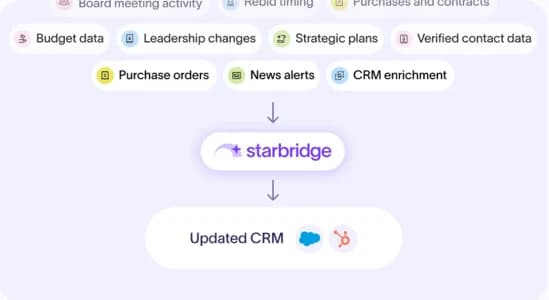
Starbridge Account Scoring ranks the full market on those factors and 100-plus buying indicators, so reps see which accounts are approaching a decision.
Scoring criteria are configured in plain language through a Buyer Bridge, and scores update automatically inside Salesforce or HubSpot as new buying indicators arrive.
InquirED drove $200K in new pipeline in its first quarter this way, replacing manual board-document research with signal-driven scoring that showed which districts were ready to buy.
Timing a specific account without manual research
Scoring tells you which accounts to work first. This section covers how to read an account’s real buying window from its spend history, and the pre-RFP indicators that surface before an opportunity goes public.
What the budget reveals before the bid
An account’s budget tells you how and when it actually buys, well before the first call.
Inferred renewal dates, past purchase orders, and incumbent vendor relationships (all discoverable in public documents) reveal the real decision window.
- A recurring July purchase order can suggest a renewal window, but confirm the contract term.
- A 2023 contract in a three-to-five-year category suggests a possible 2026-to-2028 decision window.
Reading that account by account is where reps waste the most research time.
Starbridge’s Public Spend Intelligence surfaces inferred renewal dates, past purchase orders, and incumbent vendor relationships across government and education spend data. A rep gets a renewal window accurate enough to prioritize outreach instead of reading budgets one at a time.
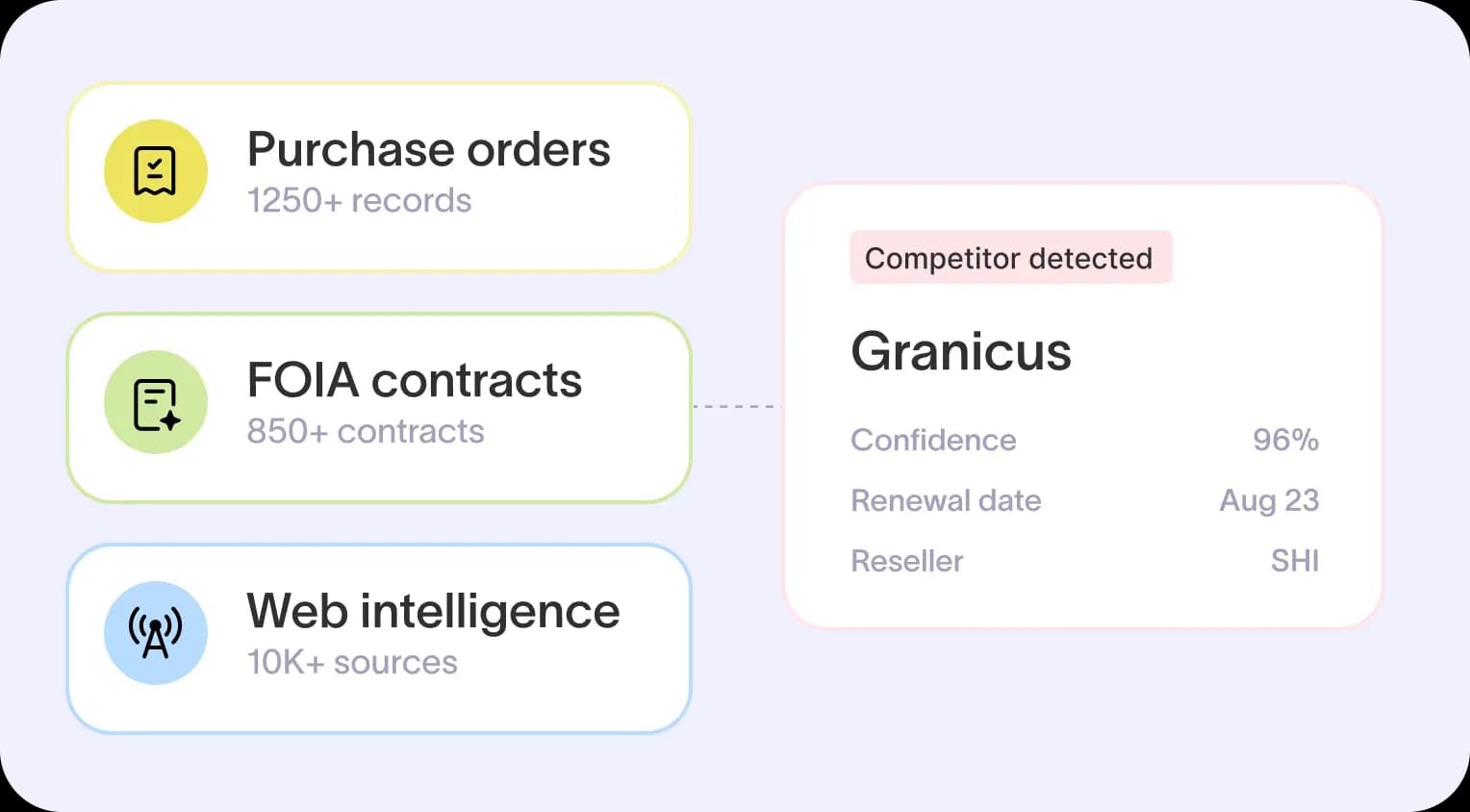
Account-level fiscal timing replaces the guesswork of ranking by geography or size.
Frontline Education cut research time by 90%, freeing reps for buyer conversations instead of manual account research.
Pre-RFP indicators that surface before opportunities go public
Pre-RFP indicators show what an account plans to buy next, often months before the RFP.
This means that by the time an RFP is published, a competitor has often shaped the criteria already. Seasoned public-sector sellers watch these early indicators so they can reach out first, and potentially shape the RFP requirements later:
- Board discussions of a problem your product solves
- New program line items in a proposed budget
- Grant awards tied to a new spend category
- Contract expirations across your market
- Leadership changes tied to purchasing authority
Spotting the indicator is difficult, but even more difficult is reaching the person who owns the decision while requirements are still forming.
That’s one of the reasons we created Starbridge.
Starbridge Contacts & Company Data is sourced from agency, district, and university websites through continuous web crawls.
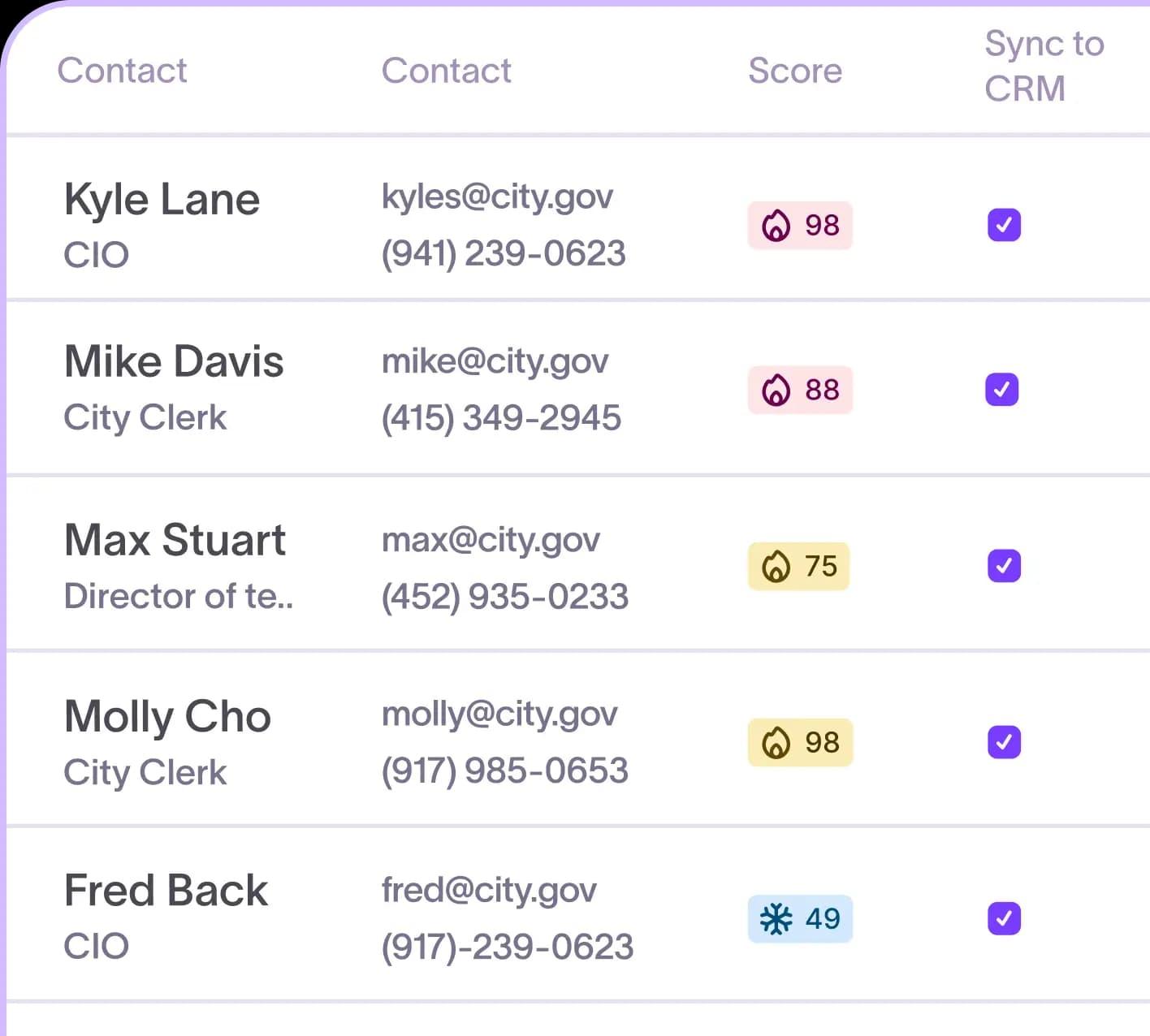
Each contact is bounce-checked to 98% email accuracy, compared with roughly 75% to 85% from generic databases.
Reps reach a superintendent or CIO who never touches LinkedIn, and leadership-change tracking flags a new buyer when purchasing authority shifts.
The fiscal year-end spend-down window
The months before a fiscal year closes create a short, high-intent window, because agencies and districts may rush to commit funds that expire at year-end.
This section explains why the rush happens and how to catch it across your entire TAM rather than a few accounts.
Why the use-it-or-lose-it rush happens each year
In most government and education budgets, unspent appropriations don’t roll over.
The effect of an unspent balance depends on the funding source and the buyer’s carryover rules. Buyers with expiring funds may move fast in the final quarter to commit them before the deadline.
For July-to-June entities, this rush concentrates in April through June. Federal buyers compress activity ahead of September 30. The timing and urgency depend on the entity and funding source.
A software renewal or a fast-to-deploy tool is the classic year-end purchase. It can be scoped, approved, and committed inside a few weeks, which is exactly what a buyer needs when funds must be obligated before the year closes.
The spend-down window across your whole territory
Spend-down leaves a different trail than early planning. Pre-RFP indicators can point to current or future funding.
Spend-down signals point to money that has to land in the next few weeks:
- Budget amendments and line-item transfers on late-year board agendas
- End-of-year purchase approvals on board consent agendas
- Grant balances approaching their obligation deadlines
- Accounts whose past purchase orders spike in the final quarter
That activity surfaces across hundreds of accounts in the same few weeks, and a rep watching a handful of them will miss most of it.
Starbridge Buying Signal Monitor tracks more than 320,000 government and education entities around the clock, indexing board minutes, budget releases, and grants as they post.
Every buying signal arrives with a verified contact and AI-generated outreach copy, pushed straight into Salesforce, HubSpot, Apollo, or Outreach. A team catches the spend-down window across an entire territory instead of the few accounts a rep can watch by hand.
The close-out crunch before the fiscal year ends
A ready buyer can still miss the fiscal-year deadline if procurement runs out the clock. The path to a signed contract matters as much as the timing of the first call, because budget close-out and paperwork can eat the final weeks. Above a buyer’s small-purchase threshold, a deal may require formal competition unless an eligible contract or another permitted exception applies.
Starbridge’s Contract Vehicle Access provides direct access to NASPO ValuePoint, OMNIA Partners, Sourcewell, TIPS, and more.
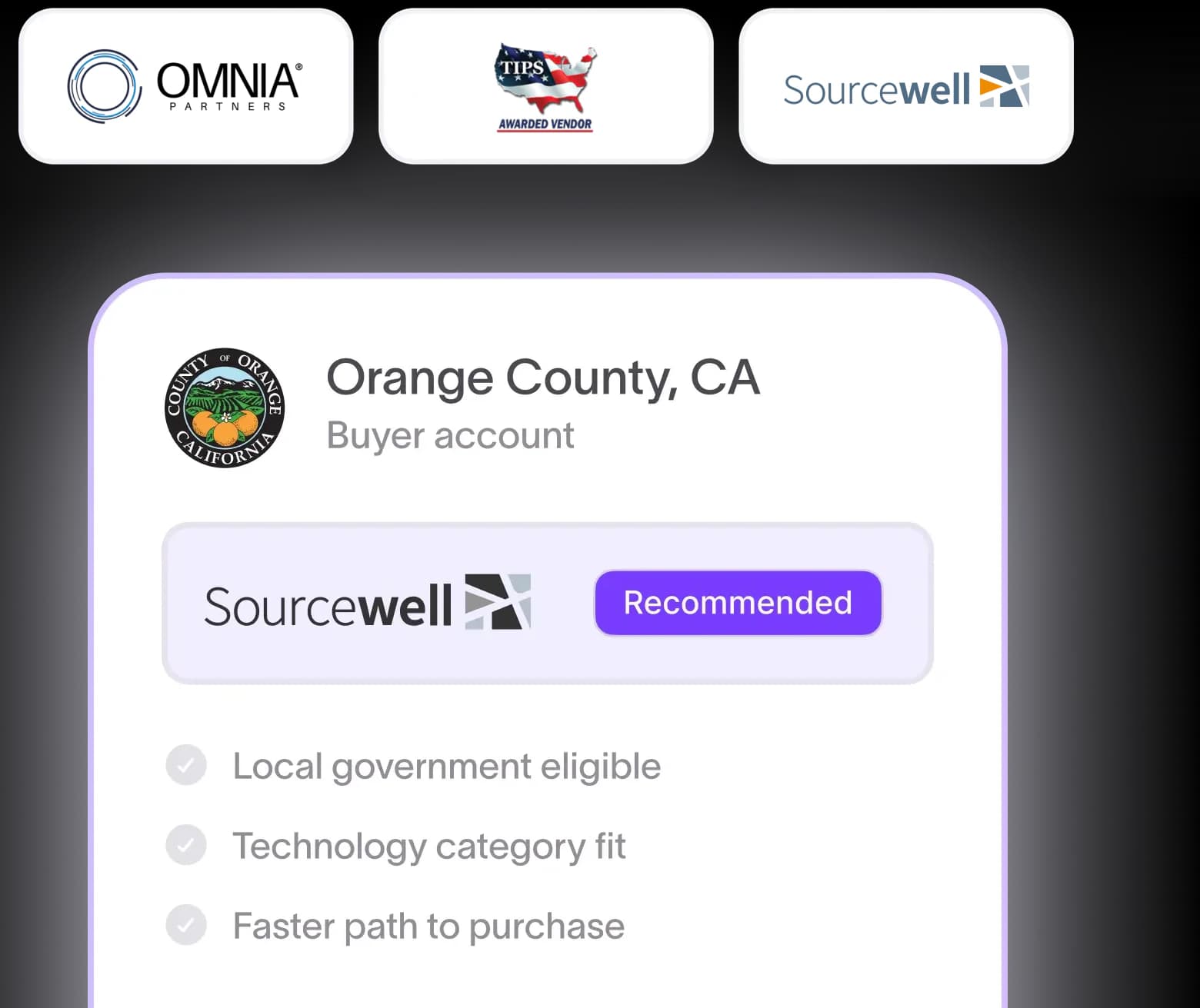
A won deal moves onto a vehicle the buyer already trusts, and Starbridge handles the compliance, paperwork, and renewals, so a procurement office can purchase before the year closes.
Turn the fiscal calendar into a repeatable timing advantage
Knowing each account’s fiscal year turns budget timing into a repeatable motion for prioritizing accounts and timing outreach. Score the market on fiscal readiness, read each account’s renewal window and get in before the RFP, catch spend-down activity as it fires, and route the close through a vehicle the buyer already uses.
None of those steps is hard for one account. The challenge is running them across thousands of districts, cities, counties, and universities, each on its own fiscal calendar, without reps losing weeks to manual research.
That’s the problem Starbridge was built to solve.
Starbridge is the AI GTM platform built on the most comprehensive dataset of public-sector buyers and buying signals. It helps companies selling to state and local government, K–12, and higher education identify, prioritize, and engage high-intent opportunities before the competition.
See how signal-driven fiscal timing surfaces the right accounts at the right moment. Book a demo.
Frequently asked questions
The federal fiscal year runs October 1 to September 30. Federal fiscal year 2026 covers October 1, 2025 through September 30, 2026. The year is named for the calendar year in which it ends.
The October start gives Congress the summer months to pass appropriations before the new year begins. Lining the fiscal year up with the legislative calendar leaves time to finish spending bills. It has run on this schedule since the mid-1970s.
Usually not. Forty-six states, most K–12 districts, and most public universities run July 1 to June 30, while the federal year runs October 1 to September 30. Counties and cities vary, so confirm each jurisdiction’s date rather than assume it matches Washington.
For July-to-June entities with expiring funds, the spend-down window concentrates in April through June, as buyers commit remaining budget before it expires. Federal buyers compress activity ahead of September 30. The exact window depends on the account’s fiscal calendar and funding rules.
Start with the account’s adopted budget or annual comprehensive financial report, which names the fiscal period and current allocations. Purchase order history can suggest a renewal window, but contract terms and buyer confirmation establish the actual dates. A platform like Starbridge scores accounts on fiscal readiness and surfaces buying indicators with verified contacts inside the CRM, so reps skip the manual research.
Explore our use case library
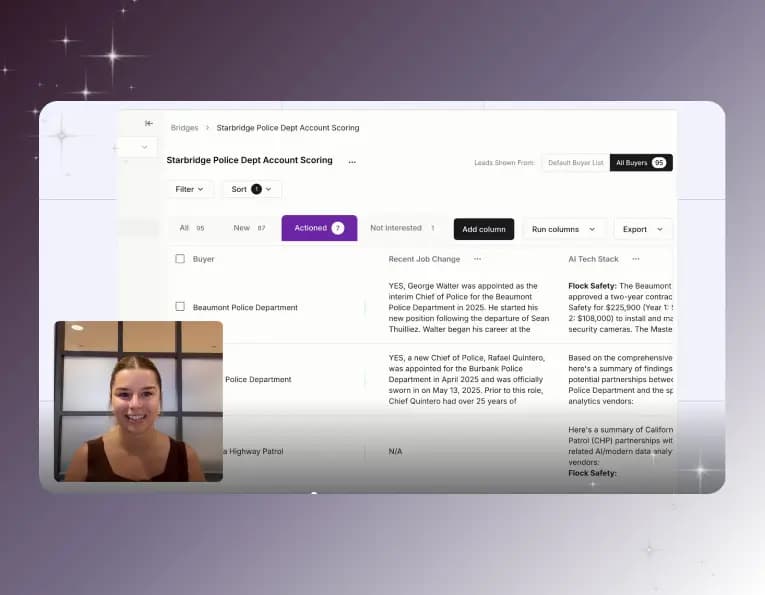 Automate account research with AI agentsStop manually researching accounts. Starbridge AI agents automate account research by monitoring buying signals 24/7 and surfacing the right contacts.
 Identify competitor contract expiration datesThe RFP is usually a formality. Starbridge surfaces competitor contract expiration dates so your reps reach accounts before the renewal cycle closes.
 Create a conference campaignTurn conference badge scans into pipeline. Import your contact list, surface buying signals across every account you met, and follow up with context.